.avif)
Gaza at Risk of Losing Its Medical Lifeline…
How Can What Remains of Life Be Saved?
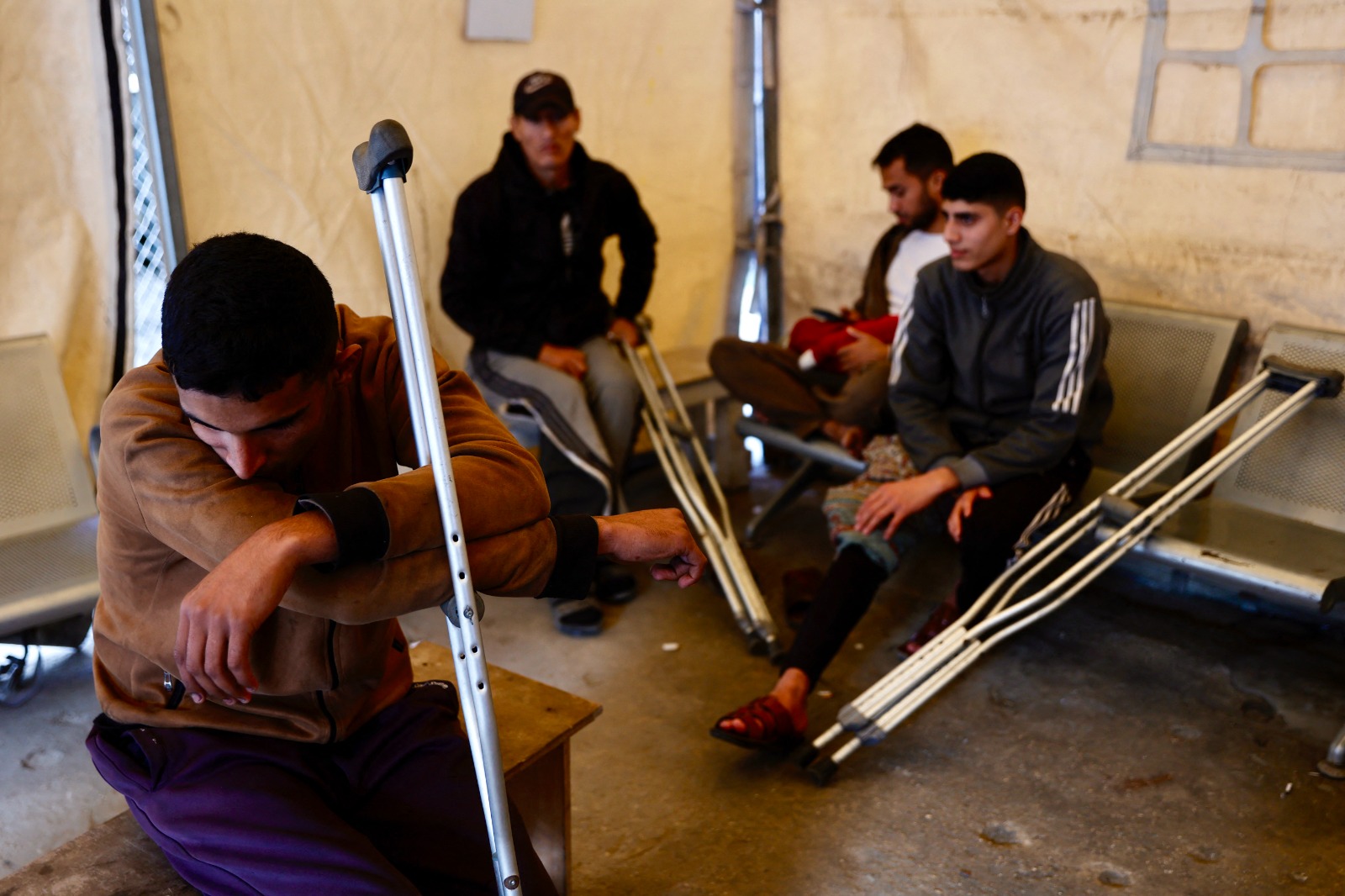
In a crowded hospital corridor in southern Gaza, a Palestinian nurse tries to calm a mother holding her child, who is suffering from severe burns.
The scene is repeated daily, but what may not last much longer is the presence of the medical teams providing this bare minimum of hope.
The president of Médecins Sans Frontières (Doctors Without Borders), Isabelle Defourny, has warned that the organization may be forced to end its operations in the Gaza Strip as early as next March, if Israel proceeds with its decision to ban the activities of MSF and 36 other international humanitarian organizations.
The Israeli decision, announced on Thursday, is based on new legislation requiring humanitarian organizations to submit lists of their Palestinian employees. Israel says the measure is a security step aimed at preventing the “infiltration of terrorist elements” into humanitarian institutions.
Relief organizations, however, view the decision as a direct threat to the continuity of humanitarian work in one of the most devastated places in the world.
A Fate Hanging in the Balance
Médecins Sans Frontières has operated in Gaza for years, relying on around 800 Palestinian staff alongside nearly 40 international employees, spread across eight hospitals in the Strip.
Defourny explains that the organization began procedures to re-register staff in July 2025, but has received no official response so far.
“We have a window of about 60 days,” she says. “After that, we may be forced to halt our activities entirely.”
A shutdown would not simply mean closing offices, but the loss of vital services on which hundreds of thousands of civilians depend.
Childbirth and Burn Treatment
According to the organization, MSF is the second-largest water distributor in Gaza and treated more than 100,000 people in 2025 for burns or injuries caused by bombardment.
It also ranks second in the number of births it assists, in a territory where the health system has nearly collapsed.
These figures reflect not only the scale of MSF’s work, but also the magnitude of the void that any potential withdrawal would leave behind.
Humanitarian Work Under Fire
Defourny notes that more than 500 humanitarian workers have been killed in Gaza since October 2023, including 15 MSF staff members.
She argues that non-governmental organizations are being indirectly targeted because they “bear witness to what is happening on the ground,” at a time when international journalists have been barred from entering Gaza and local journalists have been killed during military operations.
Who Will Remain?
In a territory exhausted by war, humanitarian organizations are not merely aid providers, but a last safety net for millions of civilians.
As the deadline approaches, fears are mounting that the closure of clinics and water distribution points could be added to an already long list of daily crises.
And the broader humanitarian question remains:
If these organizations leave… who will save what remains of life?