.avif)
Gaza Is Drowning Before the World’s Eyes
Stories of the Displaced From the Heart of Suffering
Gaza – Hayat Washington
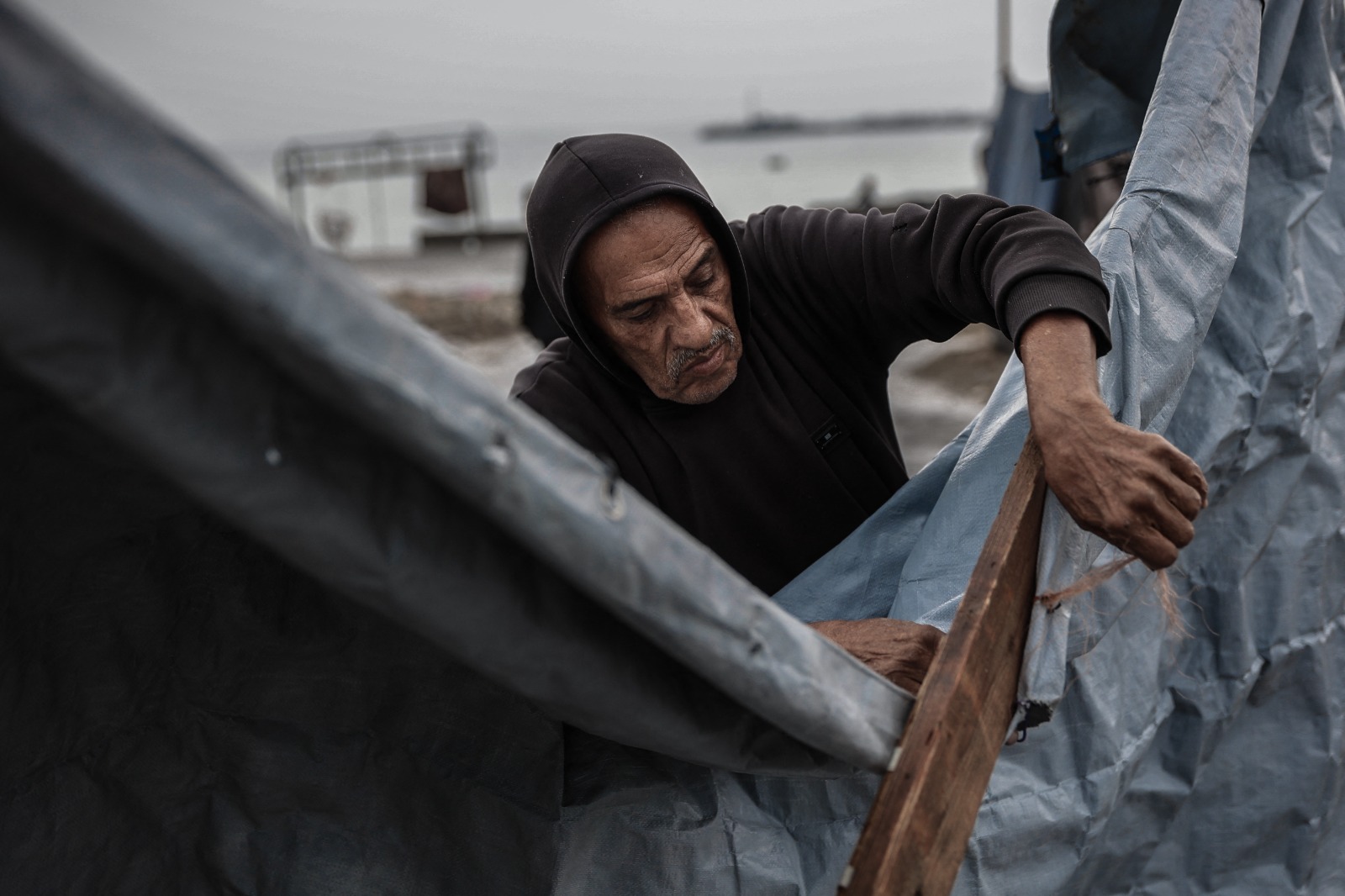
In Gaza, where buildings have been reduced to rubble and ruins, the tents of the displaced stand like ghosts struggling to withstand wind and rain.
The sky had been overcast since morning, but no one in the camps expected the rain to turn into a storm that would flood their tents and sweep away what little they had left.
Amid the mud and rising water, groups of young men rushed out carrying shovels, trying desperately to divert the water before it swallowed the tents. Their voices blended with the roar of the rain, as if nature itself were challenging their fragile resilience.
Just a few meters away, a small barefoot boy trudged through the mud with two empty jerrycans, heading toward a makeshift water station. Every step was a plunge into sludge; every drop of water he carried back was a small victory in his daily battle to survive.
Inside a small tent in the Al-Zawaida camp, Suad Muslim struggled to cover her soaked children. The blankets she had brought no longer shielded them from the cold, and the rain kept seeping through the tent as if mocking their suffering.
“It was a black night for our children… We don’t know where to go,” she said through tears, while the sound of flowing water around the tent served as a constant reminder that life here offers no rest.
Nearby, Shorouq Muslim cradled her infant daughter amid the cold and the rain. There was no firewood to light a flame, no gas for heating, not even enough clothing to protect the children from the harsh winter. The displaced now rely on aid from outside—aid that is never enough to meet their basic needs.
Across the camps, some managed to place bricks under their tent floors to stop the water from seeping in. Others huddled under scattered umbrellas, doing whatever they could to prevent their children from slipping into the waterlogged ground.
Gaza’s Civil Defense reported the partial collapse of three homes due to the heavy rainfall, as well as one death caused by the cold.
It also warned residents against returning to unsafe homes, urging instead the provision of mobile housing units equipped with solar power, proper rooms, and sanitation facilities, stressing that “tents are absolutely unsuitable,” according to spokesperson Mahmoud Basal.
And so, the people of Gaza live moment to moment—caught between the memory of a devastating war and the fear of the rain, between the loss of their homes and the need for shelter that can protect them from cold and floodwaters. Each passing day deepens their sense of injustice, but they continue to endure.
Children run through the mud in search of clean water; mothers struggle to keep their little ones warm; young men fight to keep the tents from collapsing—as if telling the world: “We are still here. We are still alive, despite everything.”
This is Gaza today: resilience, pain, hardship, and a flicker of hope glowing in the middle of an unending storm.