.avif)
“Gaza Is Not a Place One Can Leave Behind”… The Story of a Family That Chose the Rubble Over Exile
Destruction was not enough to extinguish longing. After nearly two years of forced absence, I‘tidal Rayan returned to Gaza carrying nothing but her three children, a heart heavy with yearning, and one unshakable conviction: a homeland, no matter how broken, remains a homeland.
I‘tidal left Gaza with an injury to her leg. The doctors’ warning was harsh—amputation was a real risk if she did not receive urgent treatment. She was forced to leave with her mother and children for Egypt, leaving behind her husband, her home, and everything that resembled life. In exile, she learned how to walk again, but her heart never learned how to leave.
When the Rafah crossing was partially reopened, I‘tidal was among the few permitted to return. She did not hesitate, despite knowing she would return not to a house, but to a tent; not to a city with electricity, but to one stripped of its features. Before crossing the border, she said:
“I miss going back to my country… even if I return to live in a tent.”
In Al-Arish, her children packed their blankets with a joy that felt like a holiday. Hanan tied a ribbon in her hair, waiting to see her father, while the three children chanted with childish excitement, “We’re going to Gaza.”
The journey was long and heavy—three checkpoints, questions, waiting, and unspoken fear. Then, at midnight in Khan Younis, it all ended in an embrace. A long hug reunited I‘tidal with her husband Ahmad, followed by another that returned the children to their father’s arms. A brief moment, yet it felt as if it compensated for two years of loss.
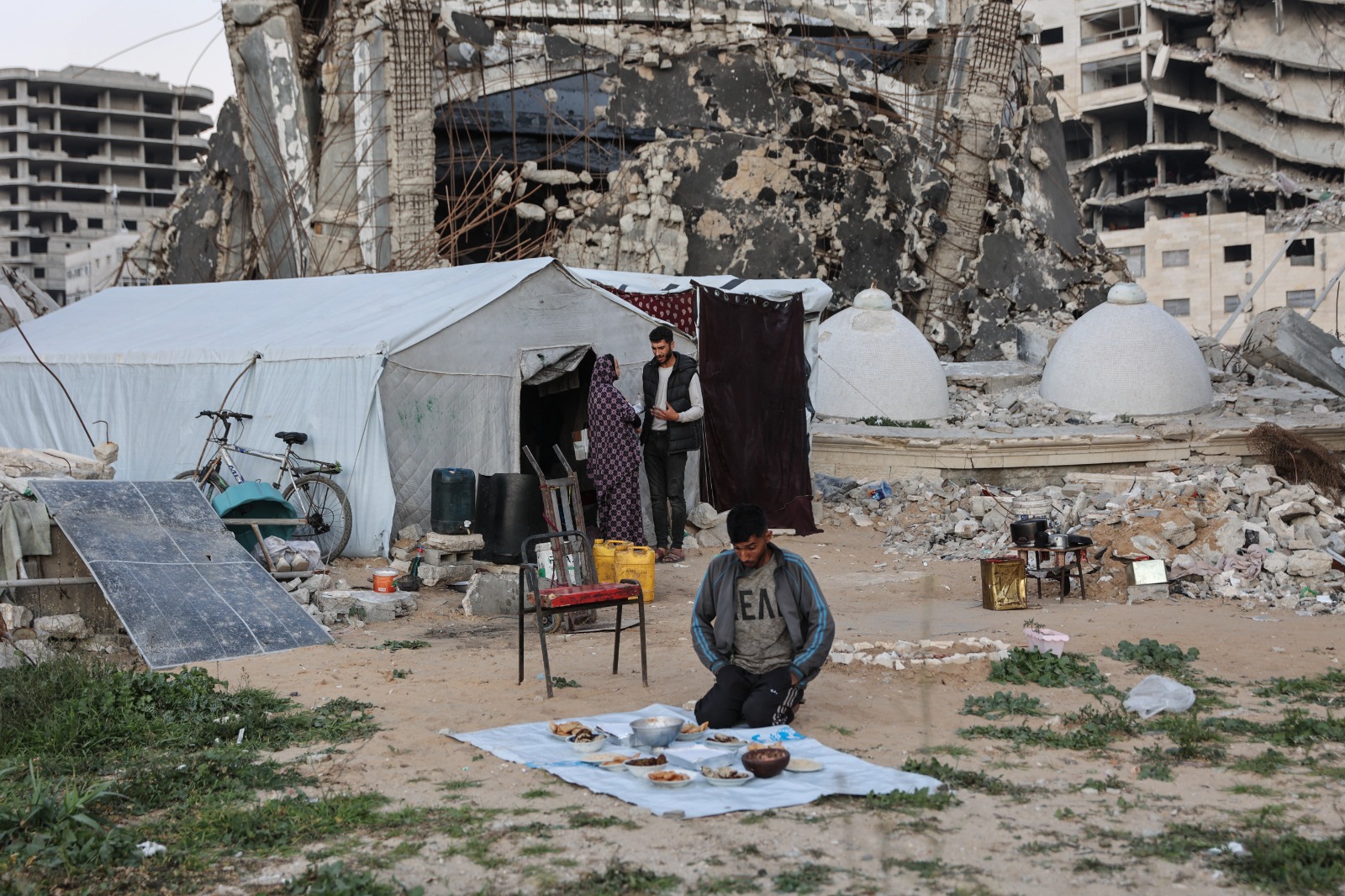
But shock awaited them. I‘tidal says, “Not a single house was standing… everything was destroyed.” The home that had once sheltered them in northern Gaza no longer existed.
With great difficulty, Ahmad managed to secure three mattresses for five people, and they began a new life inside a tent.
Many asked: Why return? Why choose destruction over safety?
I‘tidal’s answer was simple, painful, and honest:
“Exile is hard… life in Gaza is still beautiful, even if it’s destruction.”
This is not a story about returning to a place, but about returning to meaning—to a husband, to memory, to a land in ruins that still pulses with life in the hearts of its people.