.avif)
Residents of Nur Shams
Gathering Memories Amid the Stone Ruins
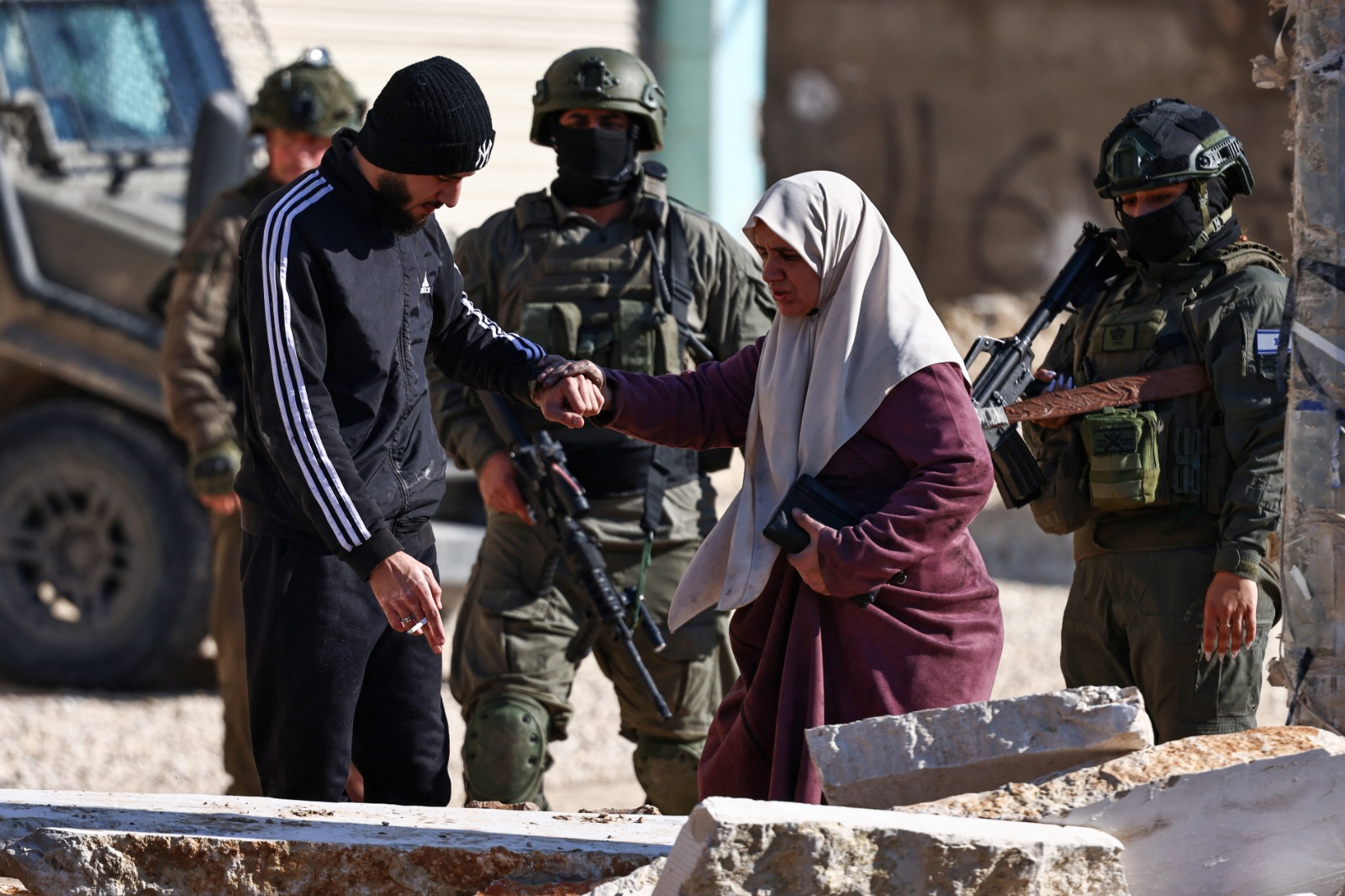
On a cold Wednesday morning, dozens of residents of the Nur Shams refugee camp in the occupied West Bank returned to the homes from which they had been forcibly displaced months earlier.
The return was brief and painful. They were allowed only to collect some personal belongings before the Israeli army proceeded to demolish 25 buildings inside the camp.
The scene was harrowing: small trucks loaded with mattresses, children’s toys, pieces of furniture, and even window frames, while soldiers stood at the entrances checking IDs and conducting body searches. Entry was permitted only to those who had received demolition notices for their homes.
Mahmoud Abdullah, one of the displaced residents, could not hide his shock and grief as he saw what remained of his home for the first time since his displacement. As his eyes scanned the remnants of his childhood and family memories, he said: “I found only a few houses that are still habitable—maybe two or three—but even those are unfit for living. The camp has been completely destroyed.”
Despite the scale of devastation, Palestinian families have not lost hope. Ibtisam Al-Ajouz, whose home was also demolished, spoke with a voice filled with resolve: “We ask God to compensate us with palaces in heaven. All that you see here are just walls, and this will not weaken our determination.”
She added: “We are determined to return, and God willing, we will rebuild. Even if the houses are demolished, our morale is high and we will not be afraid.”
This operation is not the first of its kind. At the beginning of this year, the Israeli army launched a large-scale military campaign in refugee camps across the northern West Bank, aiming—according to its statements—to eliminate armed Palestinian groups. As a result, thousands of residents were displaced from camps such as Tulkarm, Nur Shams, and Jenin, leaving more than 30,000 people without shelter and with little prospect of return.
In the camp’s narrow alleys, bulldozers and armored vehicles asserted their presence, while the devastation told stories of lives turned upside down—of dreams and aspirations that vanished beneath the rubble of homes.
Roland Friedrich, Director of UNRWA Affairs in the West Bank, said that around 1,600 homes have been fully or partially destroyed during these operations, deepening the scale of the humanitarian tragedy.
The roots of this suffering date back to after 1948, when thousands of Palestinians were displaced following the establishment of the State of Israel and the wars that accompanied it. Refugee camps were initially set up as tent settlements. Over the years, as populations grew, tents were replaced with brick homes, and buildings rose vertically to accommodate expanding families.
Amid all this destruction, the spirit of resilience remains evident in the eyes of the displaced. Despite losing their homes and memories, their determination to return and rebuild is renewed each day. Dozens of families, carrying their memories and dreams, continue to prove that the human spirit does not break—even in the darkest of circumstances.