.avif)
Uncle Zaki Shaheen
A Healing Balm for Gaza’s Wounds Amid the Ravages of War He turned his small shop into a makeshift clinic for the wounded
Exclusive – Hayat Washington
He never imagined that his modest little shop would one day become a vital medical point for treating the sick and wounded during a brutal war unleashed by the Israeli army on the once-quiet Gaza Strip he called home.
Uncle Zaki Shaheen—an elderly Palestinian man deserving the title “Angel of Mercy”—lived through the horrors of war in Gaza. The assault left deep wounds in bodies and hearts alike, and he extended his hand to ease some of that pain, restoring life to those who thought their steps had come to an end.
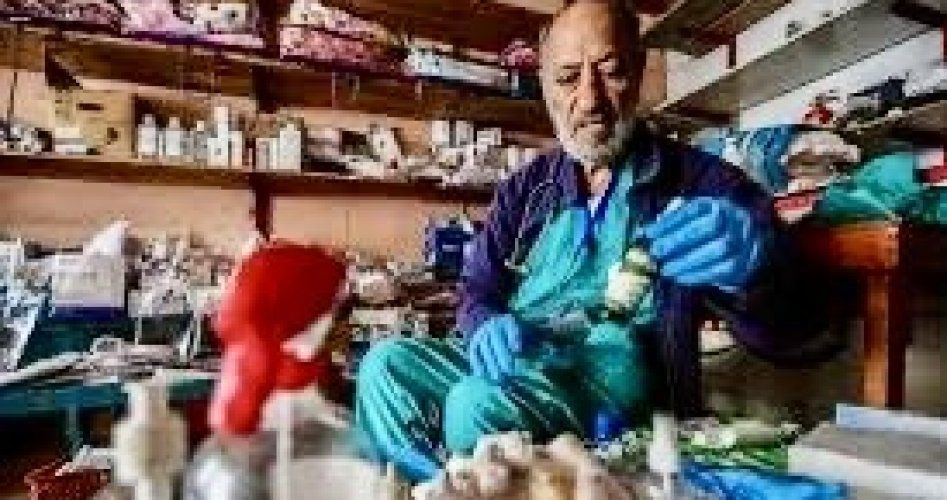
Driven by compassion and a profound sense of duty, he thought long and hard about how to help the displaced sick and injured as Israel’s war on Gaza intensified. So he transformed his small shop in the city of Rafah, on Gaza’s southern edge, into a medical point where he treated the wounded free of charge—offering them, by God’s grace, a new beginning and a first step toward dignity and survival.
The septuagenarian, who held a master’s degree in nursing and previously taught at Palestine University, opened a grocery store after retirement to support his family.
But after the war broke out on October 7, 2023, and hundreds of thousands were forced to flee while food supplies dwindled under a suffocating blockade, Uncle Zaki returned to his old profession.
Inside his improvised clinic, he treated countless cases of burns, fractures, and lacerations using the simplest tools. The most severe cases were transferred to hospitals—those that still functioned before Israeli forces later destroyed them.
As nearly one million Palestinians fled to Rafah, his medical point became one of the area’s essential centers, stocked with basic supplies such as iodine, syringes, bandages, and blood pressure and glucose monitors.
(He healed the wounds of others, while ignoring his own)
Despite suffering from complications of cancer, he considered caring for the sick and wounded a moral and national obligation. He remained a gentle, comforting presence to everyone who had lost a limb or been broken by the war.
With teary eyes and words heavy with grief, Uncle Zaki’s wife told Hayat Washington about his kindness, his quiet struggle with illness, and how he never hesitated to tend to the wounded—even as his own pain worsened—until he was finally forced to leave Gaza for treatment in Egypt, where he passed away.
She recounted how their home was always open to the displaced, providing them with food, clothing, and everything precious he could offer to help them survive the war.
Before his death, while undergoing treatment, Uncle Zaki received news that his house had been bombed in an Israeli airstrike. His only concern was the safety of his sons and daughters who still remain in Gaza to this day. He passed away soon after, leaving behind a legacy cherished by the people of the Strip.
Uncle Shaheen was the bridge between injury and care, between pain and hope. He remained so until he died in an Egyptian hospital, succumbing to cancer complications. Yet he left behind a legacy that his family—and all those he helped heal—continue to honor. When this dark chapter ends, Gaza’s history will remember him as the “remedy” that soothed its wounds in the face of a relentless war machine.