.avif)
World’s Highest Rate of Amputees… $541 Million Initial Cost to Clear Gaza of War Remnants
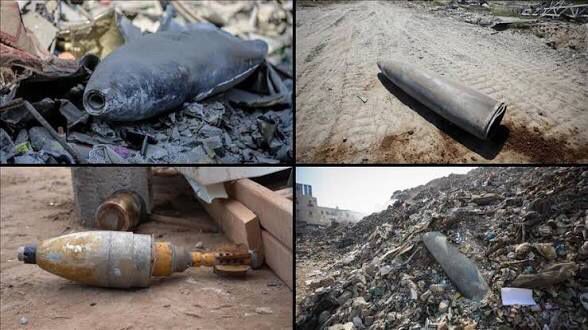
A Bomb Beneath Every Tent: How Gaza’s Rubble Became a Deadly Trap for Civilians
The United Nations has painted a grim picture of the future of the Gaza Strip, warning of alarming contamination by unexploded ordnance now lying in wait for residents at every turn.
The international body said the enclave—devastated by war since October 2023—has become an extremely hazardous environment that threatens civilian lives and severely hampers any long-term reconstruction efforts.
Speaking at a press conference in Geneva, Julius van der Walt of the United Nations Mine Action Service (UNMAS) disclosed shocking figures, confirming that more than 1,000 people have been killed by explosive remnants of war, with the actual toll likely far higher. He noted that half of the victims are children.
In a related development, Save the Children reported that Gaza currently records the highest number of child amputees in the world, with explosive weapons causing permanent disabilities to around 475 children every month.
Although the full scale of the catastrophe remains difficult to assess, field data indicate a high density of unexploded devices. Van der Walt said preliminary surveys revealed at least one unexploded munition every 600 meters, adding that explosive remnants have been found inside tents inhabited by displaced families for weeks.
Risks are compounded by severe overcrowding, as the population has been compressed into areas reduced by half due to military operations. Explosive weapons have spread even into the most densely populated refugee camps, amid warnings that these devices could detonate as humanitarian convoys pass through.
According to UN estimates, addressing this deadly legacy will require an initial budget of $541 million, contingent on the availability of equipment and the necessary permits.
Experts caution that Gaza’s explosives crisis will not end anytime soon and could persist for decades, drawing comparisons to Europe, where bombs from World War II are still being discovered to this day.
Analysts argue that the greatest challenge lies in explosives buried beneath millions of tons of rubble, making the recovery of victims or the launch of new infrastructure projects a perilous gamble without urgent and large-scale international intervention.